


eSUN eASA+ Filament 1KG 1.75mm
Price range: RM69.90 through RM73.90
Printing parameters:
• Best print temperature: 250-280℃
• Bed temperature: 90-110℃
• Idling speed: 90-250mm/s
Order Info
- Order will be shipped out from our KL warehouse in 1-3 business days once being processed.
- If you need Lalamove once purchased, WhatsApp to our phone for quick arrange delivery.

eSUN eASA+ ASA Filament 1.75mm 1KG – UV Resistant Filament for Outdoor 3D Printing
eSUN eASA+ is a high-performance ASA filament (Acrylonitrile Styrene Acrylate) designed for outdoor 3D printing and functional applications. Unlike standard ABS filament, ASA offers exceptional UV resistant properties and weatherability, making it the ideal choice for parts exposed to sunlight and harsh environmental conditions.
This eSUN eASA filament is available in two variants: eASA (Standard) and eASA+ (Improved), each with slightly different mechanical properties to suit your project requirements.
eSUN eASA+ Key Features
- UV Resistant – Maintains color and strength under prolonged sun exposure
- Weather Resistant – Withstands rain, humidity, and temperature fluctuations
- High Impact Strength – Excellent toughness for functional parts
- Anti-Static Properties – Reduces dust accumulation on printed surfaces
- ABS-Like Properties – Similar printability with better outdoor durability
- Tangle-Free Spool – Precision wound for consistent feeding
eSUN eASA+ Printing Parameters
| Parameter | Recommended Range | Notes |
|---|---|---|
| Nozzle Temperature | 250 – 280°C | Start at 260°C and adjust |
| Bed Temperature | 90 – 110°C | Heated bed required |
| Print Speed | 40 – 100 mm/s | Up to 250 mm/s for high-speed printers |
| Cooling Fan | 0 – 30% | Minimal cooling recommended |
| Enclosure | Required | Reduces warping significantly |
| Bed Surface | PEI or PVP Glue | Glass with glue stick also works |
eSUN eASA vs eASA+ Material Properties
Choose the right variant for your application:
| Property | eASA (Standard) | eASA+ (Improved) |
|---|---|---|
| Density | 1.00 g/cm³ | 1.06 g/cm³ |
| Tensile Strength | 50 MPa | 37.36 MPa (XY) |
| Flexural Strength | 35 MPa | 57.4 MPa (XY) |
| Flexural Modulus | 4300 MPa | 1849 MPa (XY) |
| Impact Strength (IZOD) | 19 kJ/m² | 20.11 kJ/m² (XY) |
| Heat Distortion Temp | 88°C | 96.4°C |
| Elongation at Break | 30% | 5.39% (XY) |
| Melt Flow Index | 10-15 g/10min | 16 g/10min |
Test conditions: 220°C/10kg for MFI, 0.45MPa for HDT. XY = horizontal print orientation.
ASA Filament vs ABS Filament Comparison
| Feature | ASA | ABS |
|---|---|---|
| UV Resistance | Excellent | Poor – yellows and degrades |
| Outdoor Use | Recommended | Not recommended |
| Weather Resistance | Excellent | Poor |
| Warping Tendency | Medium | High |
| Fumes | Less than ABS | Strong odor |
| Enclosure Required | Yes | Yes |
ASA Filament Applications for Outdoor 3D Printing
- Automotive Parts – Side mirrors, trim pieces, exterior components
- Outdoor Equipment – Garden tools, enclosures, mounting brackets
- Building Materials – Fixtures, covers, architectural elements
- Electronics Housings – Weatherproof enclosures, sensor housings
- Functional Prototypes – End-use parts requiring UV stability
ASA Filament Printing Tips
- Use Enclosure – Required to prevent warping from high shrinkage.
- Lower Infill – 15-25% reduces internal stress on large prints.
- Minimize Cooling – 0-30% fan for good layer adhesion.
- First Layer – Use PEI, glue stick, or ABS slurry for adhesion.
- Dry if Needed – 80°C for 4-6 hours if exposed to humidity.
eSUN eASA+ Filament Specifications
| Brand | eSUN |
| Material | ASA (Acrylonitrile Styrene Acrylate) |
| Diameter | 1.75mm (Tolerance: ±0.03mm) |
| Net Weight | 1kg per spool |
| Spool Dimensions | 200mm outer, 55mm inner diameter |
| Certifications | REACH, RoHS Compliant |
| Packaging | Vacuum-sealed bag with desiccant |
eSUN eASA Filament FAQ
Q: Do I need an enclosure to print ASA?
A: Yes, an enclosure is strongly recommended. ASA has high shrinkage rate and prints best in a heated chamber at 40-60°C ambient temperature.
Q: Can I print ASA without a heated bed?
A: No, a heated bed at 90-110°C is required. ASA will not adhere properly to a cold bed.
Q: What’s the difference between eASA and eASA+?
A: eASA+ is eSUN’s improved formula with better heat resistance (96°C vs 88°C HDT) and higher impact strength. eASA has higher elongation at break, making it slightly more flexible.
Q: Is ASA food safe?
A: No, ASA is not food safe and should not be used for food contact applications.
Q: How do I store ASA filament?
A: Store in the original vacuum-sealed bag with desiccant. If opened, use a filament dry box or resealable bag with silica gel.
Related Products
Looking for other 3D printing materials? Explore our collections:
- ABS Filament – For indoor functional parts
- PETG Filament – Easy to print, good strength
- PLA Filament – Beginner-friendly material
- All eSUN Products – Browse full eSUN range
| Weight | 1.40 kg |
|---|---|
| Dimensions | 15.00 × 15.00 × 7.00 cm |
| Colour | Black, White |
| Variation | eASA (Normal), eASA+ (Improved) |
Only logged in customers who have purchased this product may leave a review.
Related products

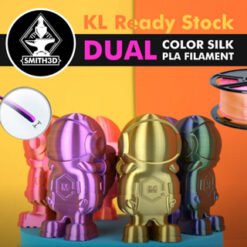
Glossy / SILK
Smith3D Dual-color PLA Filament Silk Quantum PLA – 1kg Spool, 1.75mm for Multi-Color 3D Printing


Materials

Carbon Fiber
Bambu Lab PLA CF Carbon Fiber Filament – 1KG 1.75mm with RFID, High-Speed Easy-to-Print


Reviews
There are no reviews yet.