


Bambu Lab PA6 GF Filament 1kg 1.75mm
RM299.00
Product Features
- Built to Last
- Dimensional Stability
- Exceptional Thermal Properties
- Chemical Resistance
- Smooth Surface and More Colors
- Diameter: 1.75mm +/- 0.03mm
Cautions for Use
- 0.2 mm Nozzle Not Compatible
- Stainless Steel Nozzle Not Recommended
- Enclosure Printers Required
- AMS Compatible
- AMS lite NOT Compatible
- Dry before Use
Order Info
- Order will be shipped out from our KL warehouse in 1-3 business days once being processed.
- If you need Lalamove once purchased, WhatsApp to our phone for quick arrange delivery.

Bambu Lab PA6-GF Filament 1.75mm 1KG – Glass Fiber Reinforced Nylon for Engineering Applications
Bambu Lab PA6-GF is a glass fiber-reinforced nylon (PA6) filament designed for high-performance engineering applications. This industrial-grade material delivers exceptional mechanical strength, durability, and dimensional stability while remaining more cost-effective than other top-tier engineering filaments. The glass fiber reinforcement provides resistance to chemicals, oils, heat, UV, and wear.
Ideal for functional prototypes, mechanical components, jigs, fixtures, and production parts that require professional-grade strength and precision. AMS compatible for seamless multi-material printing on Bambu Lab printers.
Bambu Lab PA6-GF Key Features
- Glass Fiber Reinforced – Enhanced strength and rigidity
- High Dimensional Stability – Maintains shape under stress and heat
- Chemical & Oil Resistant – Withstands harsh environments
- Heat Resistant – High deflection temperature for hot applications
- UV & Wear Resistant – Suitable for outdoor and mechanical use
- AMS Compatible – Multi-material printing ready (not AMS Lite)
Bambu Lab PA6-GF Printing Parameters
| Parameter | Recommended Value | Notes |
|---|---|---|
| Nozzle Temperature | 260-290°C | High temp nylon printing |
| Bed Temperature | 80-100°C | PEI plate recommended |
| Nozzle Type | Hardened Steel Required | 0.4mm/0.6mm/0.8mm (0.6mm recommended) |
| Enclosure | Required | Reduces warping and splitting |
| Infill Pattern | Gyroid recommended | ≤50% density, ≤6 wall layers |
| Build Plate | Smooth or Textured PEI | Both compatible |
Drying Requirements
| Method | Temperature | Duration |
|---|---|---|
| Blast Drying Oven | 80°C | 8-12 hours |
| Printer Heatbed | 90-100°C | 10-12 hours |
| Storage | <20% RH | Sealed with desiccant |
Do not exceed 100°C as spool may deform. Nylon absorbs moisture; proper drying is critical.
PA6-GF vs Standard Nylon Comparison
| Property | PA6-GF | Standard PA6 |
|---|---|---|
| Stiffness | Very High | Moderate |
| Dimensional Stability | Excellent | Good |
| Warping | Reduced | Moderate |
| Wear Resistance | High (dry) | Moderate |
| Nozzle Wear | Abrasive (hardened nozzle required) | Low |
PA6-GF Engineering Applications
- Structural Components – Load-bearing parts requiring rigidity
- Mechanical Parts – Gears, brackets, and housings
- Jigs & Fixtures – Manufacturing tools and templates
- Automotive Parts – Under-hood and structural components
- Industrial Equipment – Machine parts and covers
- Outdoor Applications – UV and weather-resistant parts
PA6-GF Printing Tips
- Hardened Nozzle Required – Glass fiber is abrasive; brass nozzles will wear rapidly.
- Dry Thoroughly – Nylon absorbs moisture quickly; dry before every print session.
- Use Enclosure – Essential for preventing warping and layer splitting.
- Annealing Optional – Heat treat at 80-130°C for 6-12 hours to improve properties.
- Moisture Improves Toughness – After printing, some moisture absorption increases toughness.
Bambu Lab PA6-GF Specifications
| Brand | Bambu Lab |
| Material | PA6-GF (Glass Fiber Reinforced Nylon 6) |
| Diameter | 1.75mm ± 0.03mm |
| Net Weight | 1kg per spool |
| RFID Enabled | Yes (AMS compatible, not AMS Lite) |
| Nozzle Requirement | Hardened Steel (0.6mm recommended) |
| Printer Requirement | Enclosed, high-temp capable (X1C, P1S) |
Bambu Lab PA6-GF FAQ
Q: Do I need a hardened steel nozzle?
A: Yes, absolutely. Glass fiber is highly abrasive and will destroy brass nozzles within hours. Use hardened steel (0.6mm recommended) or tungsten carbide nozzles.
Q: Is PA6-GF compatible with AMS?
A: Yes, PA6-GF works with the standard AMS system. However, it is NOT compatible with AMS Lite due to the feeding mechanism.
Q: Why is drying so critical for PA6-GF?
A: Nylon is highly hygroscopic (absorbs moisture). Wet nylon causes bubbling, poor layer adhesion, reduced strength, and stringing. Always dry before printing.
Q: Can I print PA6-GF on an open printer?
A: An enclosure is highly recommended. The high print temperatures and nylon’s tendency to warp make enclosed printing essential for reliable results.
Q: What’s the benefit of annealing PA6-GF parts?
A: Annealing at 80-130°C for 6-12 hours can improve mechanical properties. However, parts may warp during annealing depending on geometry and infill.
Related Products
Looking for other engineering filaments? Explore our collections:
- PA6-CF Filament – Carbon fiber reinforced nylon
- ABS-GF Filament – Glass fiber reinforced ABS
- PETG-CF Filament – Carbon fiber PETG
- All Bambu Lab Products – Browse full range
| Weight | 1.30 kg |
|---|---|
| Dimensions | 25.00 × 25.00 × 7.00 cm |
| Variation | Black, White, Gray, Orange, Blue, Brown, Lime, Yellow |
Only logged in customers who have purchased this product may leave a review.
Related products

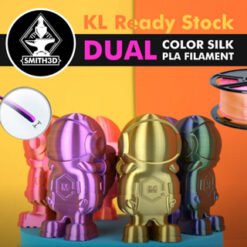
Glossy / SILK
Smith3D Dual-color PLA Filament Silk Quantum PLA – 1kg Spool, 1.75mm for Multi-Color 3D Printing

Materials
eSun ePA Nylon Filament 1kg 1.75mm – High-Strength, Durable, and Versatile 3D Printing Material

Materials
![eSUN ePA12+CF 1KG 1.75mm - [NEW & IMPROVED] High Temperature Nylon Carbon Fiber for 3D Printer PA12+CF PA12 CF Filament – product image](https://smith3d.b-cdn.net/wp-content/uploads/2025/11/esun_pa12_cf_m_1764314363-247x247.png)


Materials

Carbon Fiber

Reviews
There are no reviews yet.